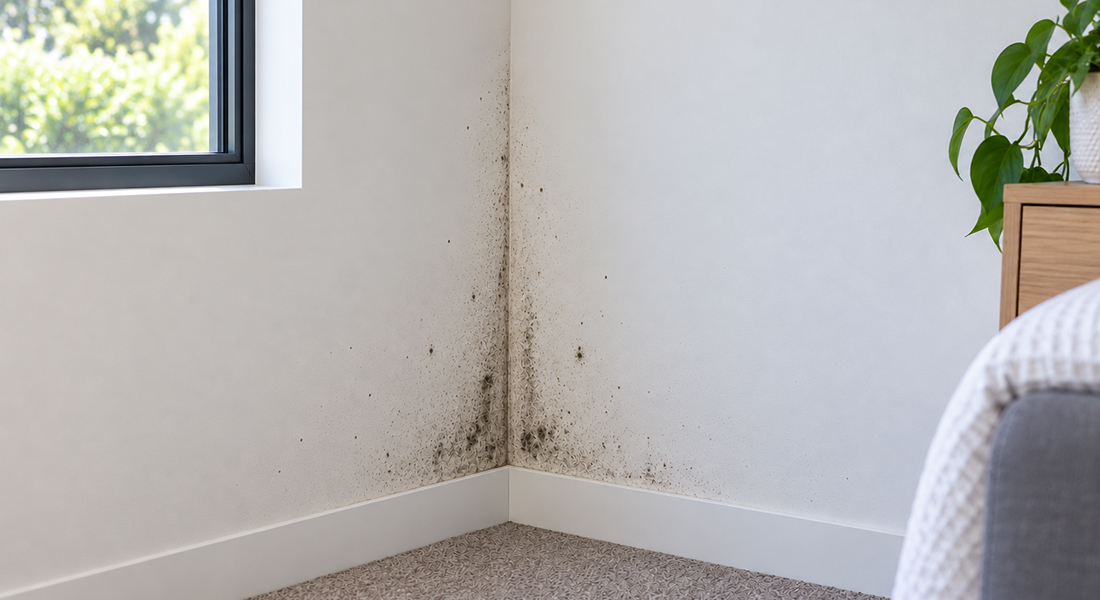
How to stop mould becoming a costly rental property problem
Mould can start as a minor maintenance issue and quickly become an expensive problem.
Once moisture is allowed to build up, mould can spread across walls, ceilings, flooring, furniture and other surfaces. It can also create unpleasant odours and make the property less comfortable for tenants.
Because mould-related damage is often excluded from landlord insurance (unless it results from a covered event), and because tenants may want compensation if the condition of the home affects their wellbeing, prevention is usually the safest approach.
Why mould appears in rental properties
Mould grows where there is excess moisture, warmth and limited airflow.
Bathrooms, kitchens, laundries, wardrobes and rooms with furniture pushed tightly against walls are common problem areas. Wet weather, humidity and poor ventilation can all increase the risk.
Properties in tropical areas with a lot of rain and humidity are prone to mould, as are older homes built without the right foundations. Regular cleaning will help, but you need to know the cause of the problem to keep it under control.
When is the landlord responsible?
Responsibility for mould generally depends on the cause.
If mould is a persistent problem due to a maintenance or building issue, you may need to address the underlying cause as the property owner. Common examples include:
- Leaking roofs, pipes or gutters
- Rising damp or water entering the property
- Faulty exhaust fans or ventilation systems
Routine inspections can help identify these problems before they become more serious.
When can the tenant be responsible?
Tenants also have a role to play in preventing excessive moisture inside the property.
Issues can arise when rooms are not ventilated, exhaust fans are not used, wet clothing is regularly dried indoors or leaks and dampness are not reported promptly.
Clear communication is important. Tenants should know who to contact when they notice water leaks, persistent condensation or early signs of mould. Regular inspections can help flag if mould is becoming an issue because the tenant isn’t taking proper care of the place.
Can landlord insurance cover mould?
Mould, mildew and fungal growth are usually excluded from landlord insurance because they can be linked to maintenance or gradual deterioration.
There can be exceptions if mould develops directly because of an insured event, such as certain storm or water damage, depending on the policy.
Protect your property before mould spreads
Mould is usually easier and cheaper to prevent than remove.
Keeping on top of repairs, ventilation, routine inspections, tenant communication and inspections can help protect your rental property and reduce the chance of a much larger problem down the track.
Discover More Articles